
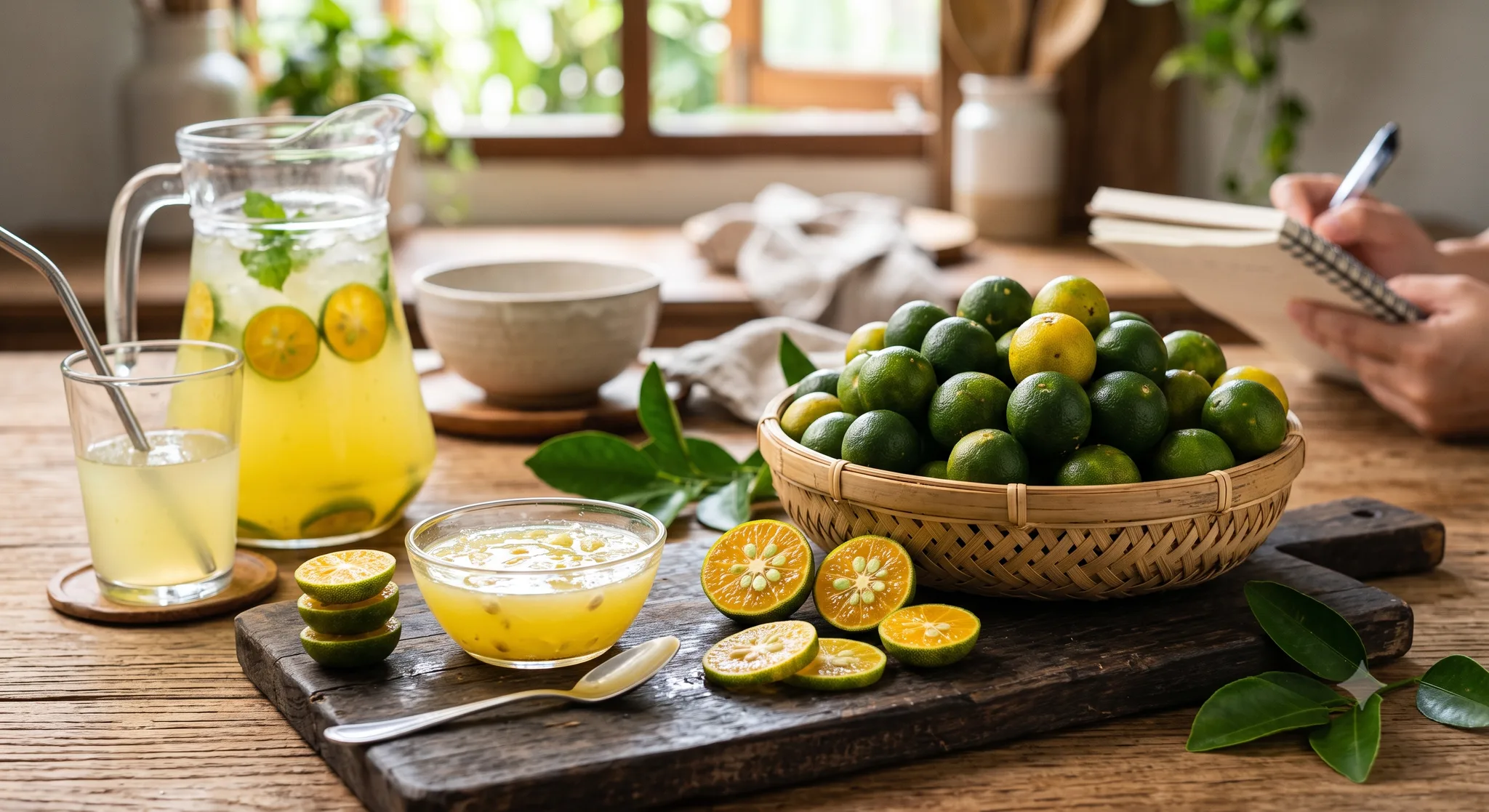
Calamansi, Explained: The Tiny Citrus Behind Every Filipino Table
If you've ever wondered what makes Filipino food taste distinctly Filipino, a lot of the answer is a fruit the size of a golf ball that most people outside the Philippines have never heard of: calamansi.
What calamansi actually is
Calamansi is a citrus hybrid, believed to be a cross between a mandarin orange and a kumquat — small, round, and green when firm-ripe (it turns orange as it ages, though it's usually used green). Squeeze one open and the juice is more sour and more aromatic than lime, with a faint sweetness underneath the acid. It's grown across the Philippines and shows up in nearly every meal, from breakfast to dessert.
Why it's not "just a substitute for lime"
Recipes often list lime as a calamansi substitute because it's easier to find in the US, but the two aren't interchangeable in flavor:
- Calamansi is sharper and more floral, with a thinner, almost citrus-tea aroma.
- Lime is more bitter, especially in the pith and skin.
- Calamansi's smaller size means more juice relative to peel, so a little goes further.
In Filipino cooking, calamansi shows up squeezed directly over grilled meats, mixed into dipping sauces with soy sauce and chili, and juiced for drinks — it's rarely just a garnish.
Where you'll find it at McInasal
Calamansi is baked into how we marinate our chicken inasal — it's one of the four core marinade ingredients, alongside garlic, ginger, and lemongrass, and it's part of what gives the chicken its bright, tangy edge instead of a heavy, sauced-on flavor. We also pour it straight into our Honey Calamansi Lemonade, which balances that same tartness with honey instead of masking it with straight sugar. Check out the Honey Calamansi Lemonade, or read more about how it's used in our chicken inasal guide.
Hungry for more?
Join the list for new menu items, member-only deals, and special offers.